
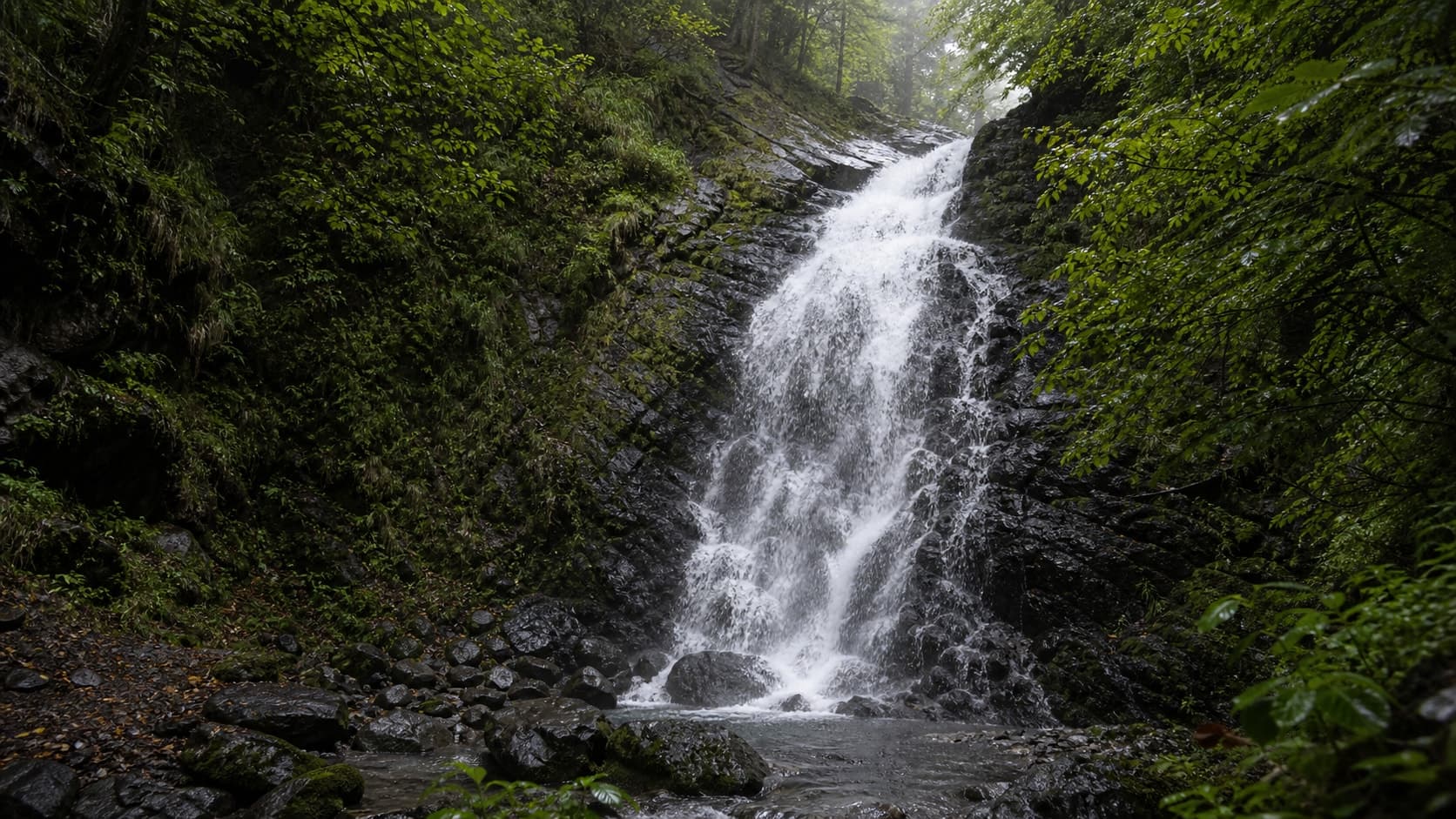
Molochny Waterfall: white water and wet stone on the Ritsa road
Molochny Waterfall is a short damp stop where slippery stone, spray, shoulder space and crowding matter more than promises of a perfect photograph. Plan it as a conditional exterior view with willingness to skip a descent or shorten the pause.
Molochny Waterfall works through damp forest, white water and close stone rather than scale. After rain the impression can be stronger, but so are slippery slabs, wet roots and narrow roadside spaces.
In the chain of stops
On the road, the waterfall links easily with Blue Lake: a brief vivid stop on the road to Ritsa, Yupshara Canyon: dramatic road corridor before Ritsa and Yupshara Stone Bag: the tightest-feeling part of the Ritsa road, but every point does not need to become a mandatory descent. If the place is crowded, wet or unclear for access, keep the waterfall as an exterior view.
Approaching the water
Do not stand on wet stones for photographs, do not go below a readable path and do not test depth or flow with your feet. Keep children close, put the phone away before moving on slippery ground and decide in advance where to turn back.
Avoiding route overload
If you have already stopped at Maiden's Tears Waterfall: a wet roadside stop before the canyon or made several roadside pauses, Molochny can stay very short. On the Ritsa road, attention margin matters more than completing a waterfall list.
Details
Practical: seeing the water from stable ground is enough here.
- Check the approach and shoulder before leaving the vehicle.
- Do not climb onto wet stones, roots or stream edges.
- In rain, crowding or poor visibility, shorten the stop.
- Wear footwear that grips wet stone, not only dry pavement.
- Carry out litter and do not widen the trail for a new angle.
Data updated: 7 July 2026
Route guidance
Need a route around this place?
We can pick a tour or build a short program around this stop for your dates, pace, and interests.
Noticed a change?
Suggest a correction for this item
If the road, opening hours, access, or description changed, send a short proposal. Publishing happens only after review.
Related
- OpenWalk to Molochny WaterfallRelatedMolochny Waterfall is a short nature stop on the Ritsa route, where wet stones, shade, spray, approach condition and return-road margin shape the decision. Do not make it mandatory in poor weather or an overloaded day.
- OpenBlue Lake: a brief vivid stop on the road to RitsaRelatedBlue Lake is a compact roadside stop where the colour can be vivid, but road safety, barriers, wet stones and low-impact behaviour matter more than getting close to the shore.
- OpenLake Ritsa: Abkhazia’s mountain mirrorRelatedRitsa is the main highland stop on the Ritsa route, but the day depends on road conditions, weather, visibility and pace. Arrive without rushing, keep a margin for the return and treat the shore as mountain water rather than a resort beach.
- OpenYupshara Canyon: dramatic road corridor before RitsaRelatedThis narrow mountain canyon on the road to Ritsa is best treated as an active traffic corridor: use safe pull-offs, do not step into the carriageway and do not feel obliged to stop in the tightest section.
- OpenYupshara Stone Bag: the tightest-feeling part of the Ritsa roadRelatedThe Stone Bag is the tightest-feeling part of Yupshara, where the road itself creates the impression. Plan only a short stop where it does not affect traffic, visibility or group safety.
- OpenMaiden's Tears Waterfall: a wet roadside stop before the canyonRelatedThis fine-thread roadside waterfall on the Ritsa road is best treated as a brief wet pause: check the stopping place, traffic, footing near the water and the impact of ribbons or litter on the rock.
- OpenRitsa Observation Tower: a short climb to another lake angleRelatedThe Ritsa observation tower gives a quick elevated angle, but a short climb still involves wet steps, wind, mist and limited space at the top. Move calmly, keep children close, do not linger in bad weather and use the Ritsa shore as a fallback.
- OpenRitsa Viewpoint: the lake panorama without rushing the edgeRelatedThe viewpoint above Ritsa gives a whole-lake view of water, forested slopes and road, but it is a short weather-dependent stop. Wind, wet rock, cloud and the edge of the platform matter more than chasing a perfect photograph.