
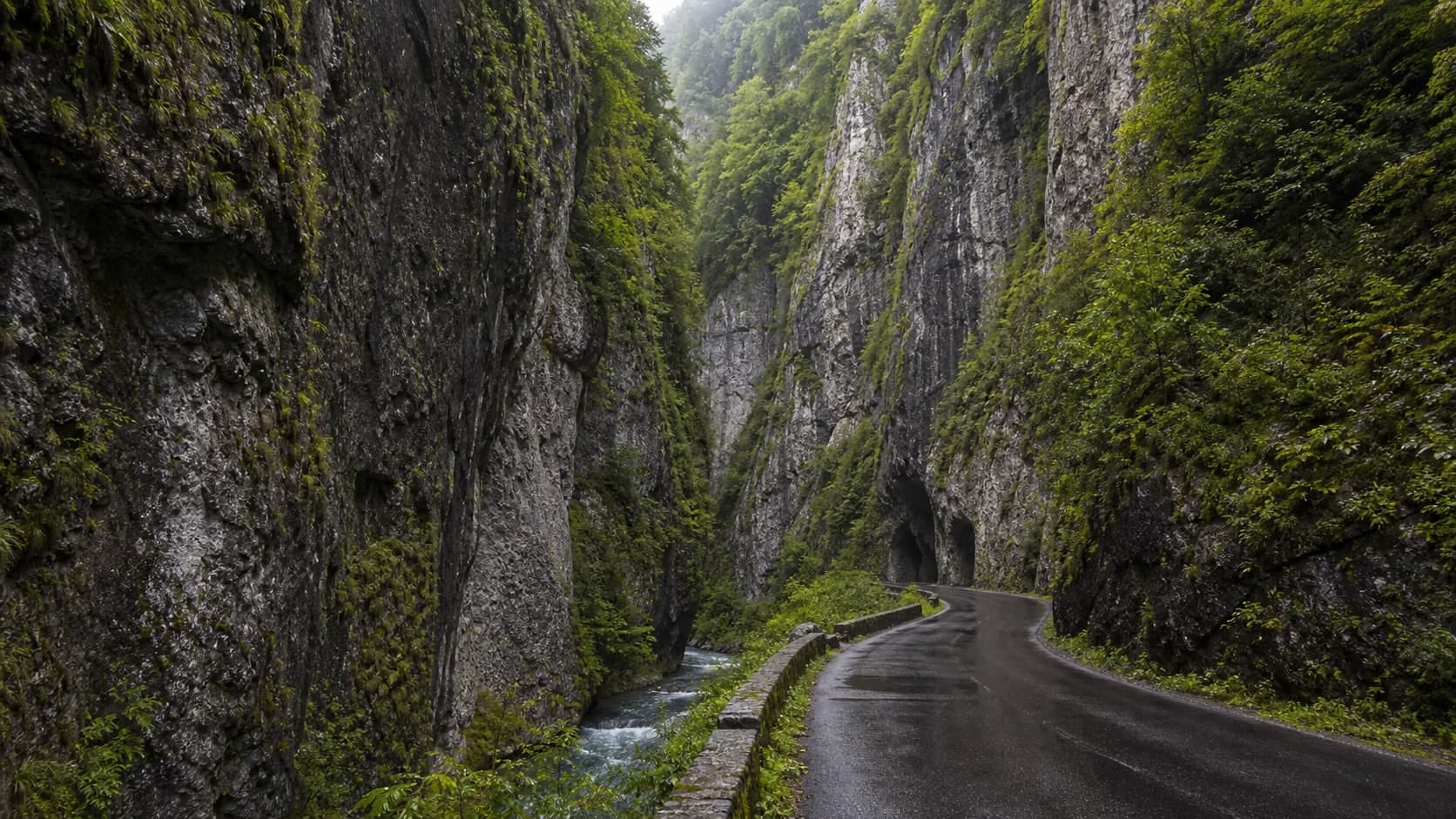
Yupshara Canyon: dramatic road corridor before Ritsa
This narrow mountain canyon on the road to Ritsa is best treated as an active traffic corridor: use safe pull-offs, do not step into the carriageway and do not feel obliged to stop in the tightest section.
Inside Yupshara, the sound changes: river and engines rebound from damp stone, while the walls rise close to the road. The drama comes from a working mountain corridor, not from a promenade, so a safe viewing point matters more than a dramatic angle.
The Stone Bag feeling
Yupshara is often associated with the Yupshara Stone Bag: the tightest-feeling part of the Ritsa road section, where the walls feel especially tight. Even outside the narrowest point, the canyon works as a sequence of rock, shade, water and moving traffic rather than a place for wandering.
How to view it safely
Use only clear pull-offs, platforms or places chosen by a driver who can see traffic. Do not step onto the carriageway, press against wet walls, place people on the shoulder for group photos or linger where vehicles need room to manoeuvre. After rain, earth, stone and roadside edges can all be slippery.
On the Ritsa route
The canyon pairs naturally with Blue Lake: a brief vivid stop on the road to Ritsa before the climb toward Lake Ritsa: Abkhazia’s mountain mirror. If the route is already delayed, the road is wet or visibility is poor, keep the stop short and save time for safer, wider viewpoints farther along.
Details
Practical: Yupshara is beautiful because it is a road canyon, so respect both traffic and terrain.
- Stop only at safe pull-offs or permitted platforms.
- Do not stand in the roadway or slow traffic for photographs.
- After rain, avoid wet walls, loose stones and slippery shoulders.
- In shade or spray, a light layer can be useful even on a warm day.
Data updated: 5 July 2026
Route guidance
Want to include this stop in a route?
We can tune "Abkhazia Classic: Lake Ritsa without a rigid timetable" for your dates or suggest a similar route for your group.
Noticed a change?
Suggest a correction for this item
If the road, opening hours, access, or description changed, send a short proposal. Publishing happens only after review.
Part of tour
- OpenAbkhazia Classic: Lake Ritsa without a rigid timetableThe classic route to Lake Ritsa: Abkhazia’s mountain mirror links the canyon, the Blue Lake, the mountain road and a lakeshore pause. It is a popular full-day outing where weather, traffic, entry rules and operating services matter more than exact timing.
- OpenNew Athos and Lake Ritsa in One Day: a full route with marginThe New Athos + Lake Ritsa: Abkhazia’s mountain mirror route suits travellers ready for a long day, significant driving and a flexible schedule. Monastery rules, cave operations, mountain weather, traffic and Ritsa services can all reshape the plan on the day.
- OpenGega Waterfall and Lake Ritsa: a mountain route based on conditionsPlan the route to Gega Waterfall: powerful water and cool air on a mountain road and Lake Ritsa: Abkhazia’s mountain mirror as a flexible mountain day via Blue Lake: a brief vivid stop on the road to Ritsa and Yupshara Canyon: dramatic road corridor before Ritsa: road condition, rain, vehicle suitability and the driver's judgement matter more than a fixed schedule. Keep time margin, grippy shoes and a real backup plan without Gega.
- OpenRitsa in a Private Format: flexibility rather than queue-free promisesA private route to Lake Ritsa: Abkhazia’s mountain mirror gives more space, pacing and choice of stops, but it does not remove weather, traffic, protected-area rules or rental operations. Treat the VIP format as a flexible day, not a guarantee of boats, empty viewpoints or perfect light.
On the way
Directional links: you can stop by or see these from here.
- OpenBlue Lake: a brief vivid stop on the road to RitsaRelatedStopoverBlue Lake is a compact roadside stop where the colour can be vivid, but road safety, barriers, wet stones and low-impact behaviour matter more than getting close to the shore.
- OpenGega Waterfall: powerful water and cool air on a mountain roadDetourRelatedGega is a powerful mountain stop with spray, cool air, slippery stones and variable road access. Plan it with margin for road, weather and the return route, not as a quick guaranteed photo stop.
- OpenMen's Tears Waterfall: a sharp roadside water stopStopoverMen’s Tears is a striking but roadside water stop where avoiding wet rock and remembering nearby traffic matter most. Keep the look short, use stable ground and do not compare waterfalls at the cost of extra risk.
- OpenPtichiy Waterfall: a short water pause on the Ritsa roadStopoverPtichiy is a small roadside cascade on the way to Ritsa: cold spray, damp stone and a brief change of pace before larger route stops. Decide on the stop by current footing, weather, traffic and time margin.
Related
- OpenLake Ritsa: Abkhazia’s mountain mirrorLeads toRelatedRitsa is the main highland stop on the Ritsa route, but the day depends on road conditions, weather, visibility and pace. Arrive without rushing, keep a margin for the return and treat the shore as mountain water rather than a resort beach.
- OpenYupshara Stone Bag: the tightest-feeling part of the Ritsa roadRelatedThematicThe Stone Bag is the tightest-feeling part of Yupshara, where the road itself creates the impression. Plan only a short stop where it does not affect traffic, visibility or group safety.
- OpenProshchay Rodina viewpoint: strong name, exposed roadside stopComplementsRelatedProshchay Rodina works as a strong story and exposed roadside viewpoint, not as a place to test the edge. Keep the stop short, treat legends as folklore and place traffic safety above the photograph.
- OpenLittle Ritsa: a quiet lake reached on footRelatedLittle Ritsa is not a quick add-on to the main Ritsa shore, but a walking route with forest, height gain, cold water and limited infrastructure. Start early, wear grippy shoes, keep descent margin and skip the ascent after rain or in poor visibility.